Read this piece in Compact Magazine from James Vaughn, a historian, at the University of Chicago and find myself quite amazed by the unique historical event that is the 250th anniversary of The United States.
The Persian and Roman empires have been in the cultural psyche recently, because America has warred with both Iran and the Pope, and it has been mentioned that those societies are more impressive or virtuous because they lasted, or are lasting, longer than we have. Granted. However, it is true that the establishment of the United States, through the Declaration of Independence, has been the greatest equalizing export of any society, no?
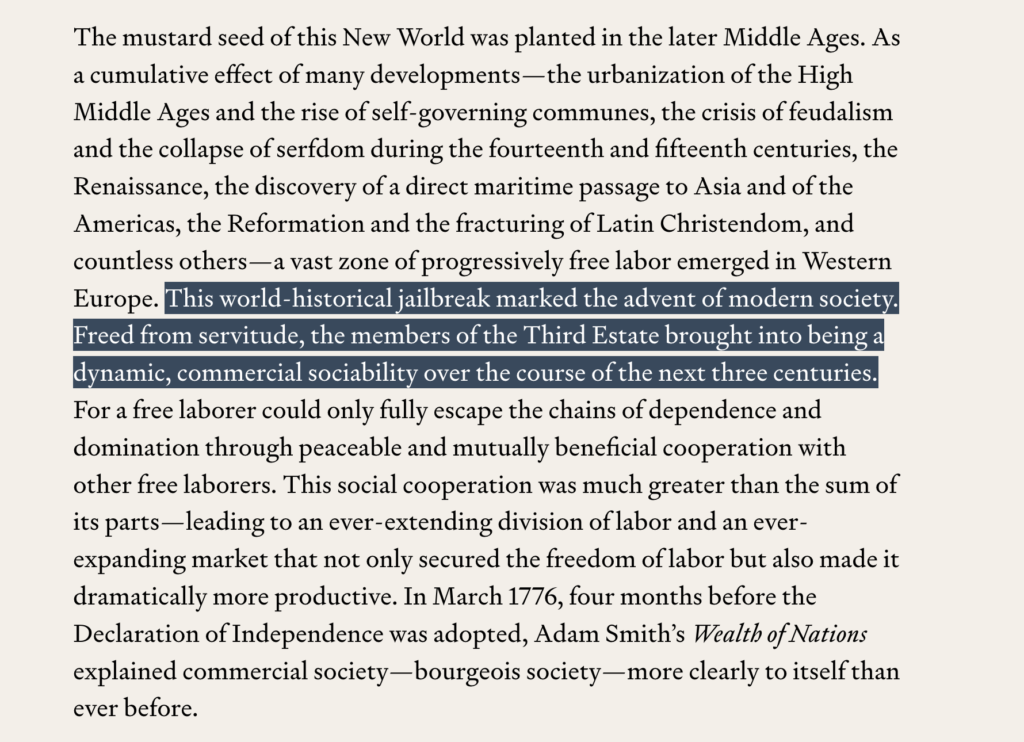
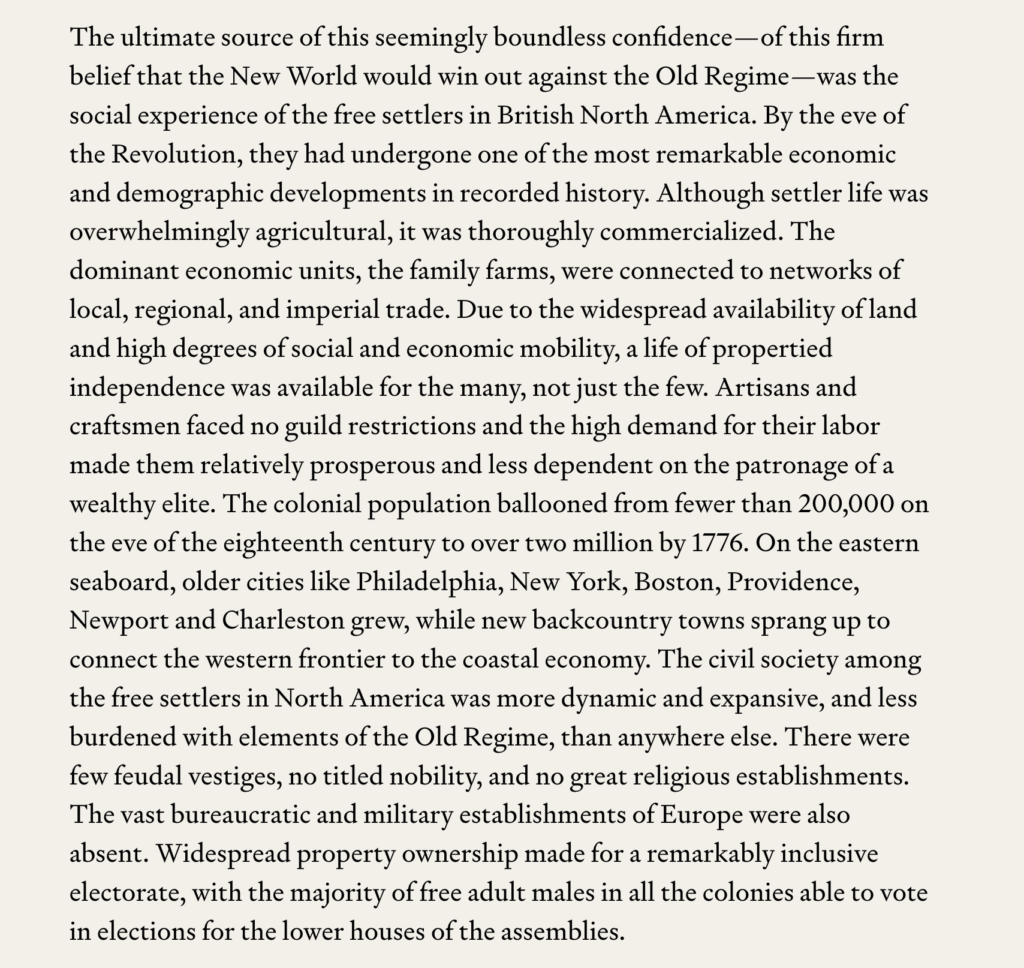
James Vaughn makes an interesting point – something that wouldn’t have occurred to me – that the success of the Declaration of Independence hinges on a society built on the free exchange of labor. I.e., labor is not bound by debt to an oligarchy or land owning elite and controlled as such. It is exchanged freely, and that is what sustains liberty. That is, anyways, how I interpret his points. I certainly think this fits and is one of the strange tensions of how culture and society seems to progress.
I.e., without our endless endeavor to create more and cheaper things, would we more and more free ourselves through improving our material and societal conditions, in order to cooperate enough to keep creating more and cheaper things?
That is oversimplified, but this comparison of The Old Word vs. The New World calls to light how labor was divided and makes me think that the Old World that was ruled by the land owners was motivated my Maintenance and the New World (breaking away from being ruled by the land owners) was motivated by something like Progress or Innovation or Freedom. The mechanics of fulfilling those visions are quite different and create a much different kind of society: feudal vs. free.
Happy Independence Day!