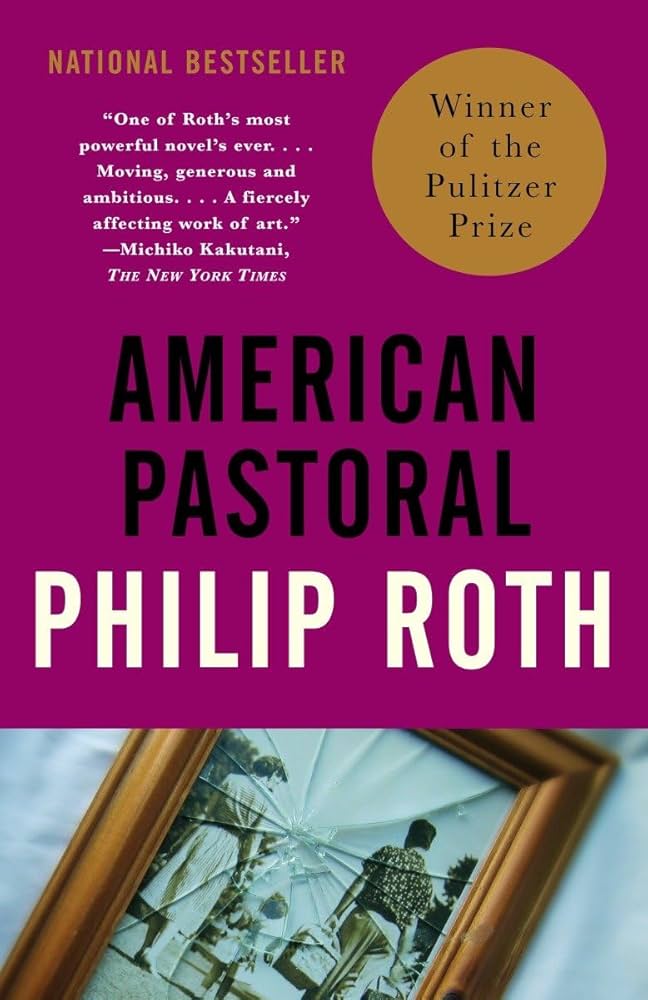
Last book I read this year and it was very enjoyable.
It’s America Dream, both as it is and the story it tells about itself.
I think it’s a tale, a commentary maybe, on what we all collectively think America was post-WWII through the 60s contrasted with the internal and external experience of people we’d think were firmly beneficiaries, and those who defined it, of America during that time.
If a friend from another country wanted to discover America, or at least pre-90s/internet-America, through the stories we tell about ourselves, this book is a great way to do so.
Lots of dog ears in this one, and a few underlines.
“All of his life he [main character who was quintessentially 2nd-gen immigrant family who did the American Dream well] had this ability to imagine himself completely. Everything always added up to something whole. How could it not when he felt himself to add up, add up exactly to one?”
The story is full of pain that parents feel for their kids.
Full of anger kids fell towards their parents because they’re drab and behind-the-times.
Full of adults struggling, predictably, to understand changes to the world; to the world as they last froze it in time after looking at it and calling it good.
“We grew up in an era when it was a different place, when the feeling for community, home, family, parents, work… well, it was different. The changes are beyond conception. I sometimes think that more has changed since 1945 [speaking in the early 1970s I think] than in all the years of history there have ever been. I don’t know what to make of the end of so many things. The lack of feeling for individuals that a person sees in that movie, the lack of feeling for places like what is going on in Newark––how did this happen? You don’t have to revere your country, you don’t have to revere where you live, but you have to know you have them, you have to know you are part of them. Because if you don’t, you are just out there on your own and I feel for you. I honestly do. Am I right, Mr. Orcutt, or am I wrong?”
Full about the Old Way, the Old Contract of, “Put your head down, work hard, go to church, involve yourself in the Rotary Club or the Shriners, and America will take care of you. Not just take care of you, but you’ll do well.”
“He had tried all his life never to do the wrong thing, and that was what he had done.”
Full about the way things used to be. Things always were that way weren’t they? All they’re always changing from the way they always were.
“Thanksgiving dinner up in Old Rimrock, and to everyone’s surprise––except maybe Dawn’s–– Lou Levov and Jim Dwyer would wind up spending the whole time swapping stories about what life had been like when they were boys. Two great memories meet, and it is futile to try and contain them.”
A novel about what we are or aren’t, or the stories we tell about that anyways.
… but because he had understand her no better than he was able to understand anyone. How to penetrate to the interior of people was some skill or capacity he did not possess. He just did not have the combination to that lock. Everybody who flashed the signs of goodness he took to be good. Everybody who flashed the signs of loyalty he took to be loyal. Everybody who flashed the signs of intelligence he took to be intelligent. And so he had failed to see into his daughter, failed to see into his wife, failed to see into his one and only mistress––probably had never even begun to see into himself. What was he, stripped of all the signs he flashed? People were standing up everywhere shouting, “This is me! This is me!” Every time you looked at them they stood up and told you who they were, and the truth of it was that they had no more idea of who or what they were than he had. They believed their flashing signs too. They ought to be standing up and shouting, “This isn’t me! This isn’t me!” They would if they had any decency. “This isn’t me!” Then you might know how to proceed through the flashing bullshit of this world.”
Full of the pain of feeling mislead by your own story about what to do and who to be in order to ___(however you would fill in the blank to satisfy what you think you should do or be).
“He could not prevent anything. He never could, though only now did he look prepared to believe that manufacturing superb ladies’ dress glove in quarter sizes did not guarantee the making of a life that would fit to perfection everyone he loved. Far from it.”
Excellent book. Do read.