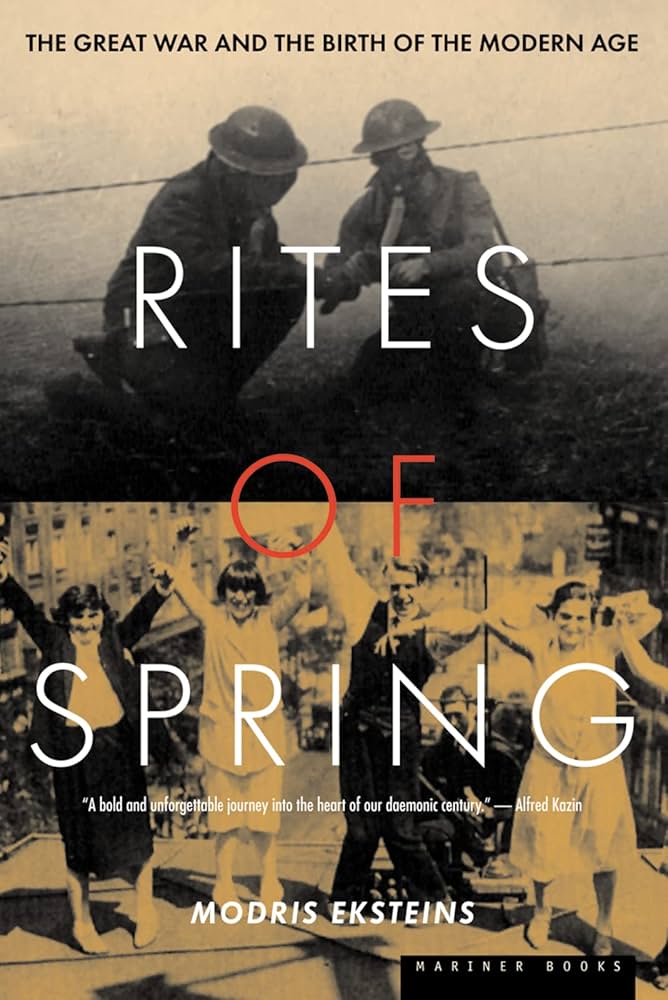
“This is a book about death and destruction.
.. a book about ‘becoming.’”
As I understand the book:
Art is avant-garde. It breaks old things. Makes you wince. Fundamentally believes change is beautiful. It provokes you because it’s provoking the artist making it.
Germany, in WWI, waged it to be do all of these things.
“… to embrace life, to rebel against bourgeois sterility, to hate respectable society, and above all to revolt – to bring about a radical revaluation of all values.”
Very good and important book I think. WWI I knew little about. Still don’t. But I liked this book because it framed it largely away from the battle field and around the human spirit, culture, and upheaval of it all.
I was struck by many things in the book, and much is underlined, but a few that stick out here at the end of reading it:
- The scale of death, and how much within minutes and hours, in the trenches of WWI
- The cultural buy in in both WWI and WWII
- For the Germans, or at least those that hastened Nazism/Third Reich, WWI never ended
- Death was a (the primary?) lens in which they understood life
- Charles Lindbergh’s trans-Atlantic flight was a massive inscription on the cultural imagination at the time and it was central to understand what Europe was going through post-WWI
- The Third Reich: “the contradictions, like the animosities, were countless”
It is a very good.